Working with PBM Images
The PBM (Portable Bitmap) file format is a very simple file format that can be used to store black-and-white images, which can easily be read directly into a framebuf and blit-ed onto the OLED display after some processing.
Creating a PBM Image
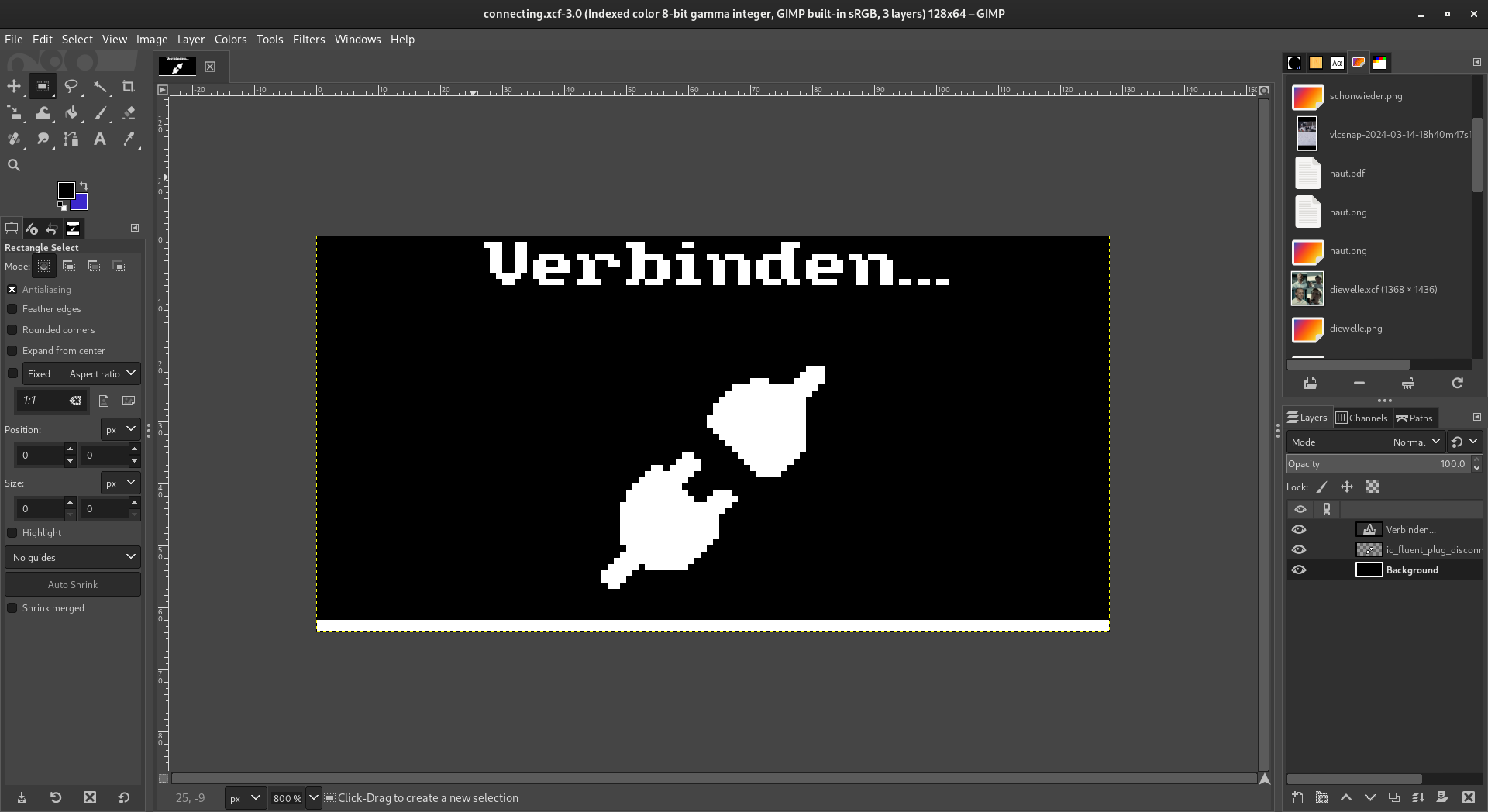
You can create a PBM image using any image editing software like GIMP that supports exporting to PBM. The image should be black-and-white, with an image size of 128x64 pixels for the entire display, or anything lower than that for a smaller image, like an icon.
Reading a PBM Image
To read a PBM image into a framebuf, you can use the display.readPBM(filename) method. This method will return a framebuf object that you can use to blit the image onto the OLED display.
from display import oled, readPBM
from time import sleep

# Read the PBM image
image = readPBM("connecting.pbm")

# Clear the display
oled.fill(0)

# Blit the image onto the display at position (0, 0)
oled.blit(image, 0, 0)

# Update the display
oled.show()

# Wait until exit
sleep(3)
How does it work?
The readPBM method firstly reads the file into a string and starts reading it line by line.
| Line | Example | Description |
|---|---|---|
| 1 | P1 | The magic number that identifies the file as a PBM file. |
| 2 | # This is a comment | Creator Comment, ignored |
| 3 | 128 64 | The width and height of the image in pixels. |
| ... | <binary data> | Image data |
The image data is read directly into a framebuf with the width and height specified in the file. After that, it is inverted to show the correct image on the OLED display.